
Why Has My Toilet Suddenly Stopped Flushing?
A toilet that will not flush is stressful. Here are the common causes, simple checks you can try and when you need an emergency plumber.
Call 020 3411 2027Read the guide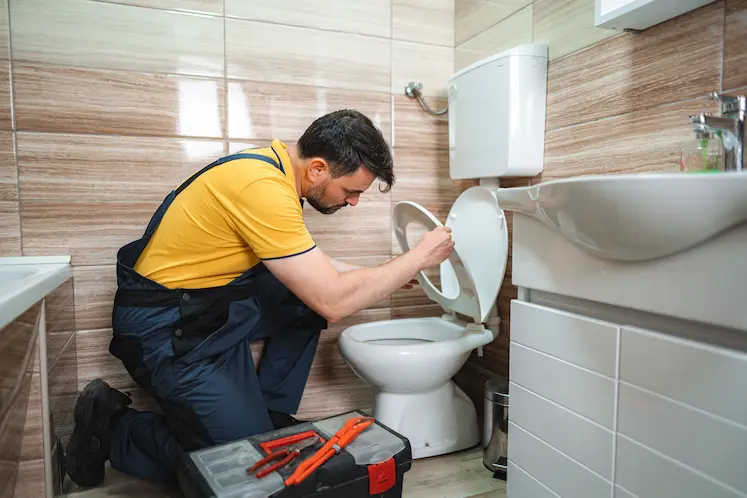
A toilet that will not flush is stressful, especially in a busy household. The cause is often simple, and in many cases you can fix it in minutes with no tools. This guide covers the common reasons a toilet stops flushing, the checks you can safely try and when it is time to call a plumber.
- Do not keep flushing if the bowl is filling up.
- Lift the cistern lid and check water level and handle linkage.
- Use a plunger if the bowl is blocked.
- Call a plumber if it overflows, keeps failing or sewage backs up.
Common reasons a toilet will not flush
What to check first
-
Stop flushing if the bowl is filling
If the water level is rising towards the rim, do not flush again. Remove the cistern lid and lift the float arm, or turn off the isolation valve (usually a small valve at the base or side), to stop more water entering.
-
Check the handle
If the handle feels loose or has no resistance, the lever or the link to the flush mechanism may have snapped or come off. Lift the cistern lid and see if the arm or chain has become detached. Reconnecting it is often simple.
-
Check the cistern water level
If the cistern is empty or very low, the fill valve may be stuck or the water supply to the toilet may be off. Check that the isolation valve is open and that the cistern fills after flushing.
-
Try a plunger
If the bowl is blocked, use a toilet plunger that forms a good seal. Push and pull steadily for 20 to 30 seconds. Put on rubber gloves and lay down old towels first.
-
Pour water into the bowl
If the cistern is not working, you can flush manually by pouring a bucket of water into the bowl from about waist height. This will often clear the contents. Do not do this if the bowl is already close to overflowing.
Do and don't
Do
- Turn off the isolation valve if water is rising.
- Wear gloves and wash your hands afterwards.
- Keep a plunger in the bathroom.
- Only flush toilet paper and human waste.
Don't
- Keep flushing a blocked toilet.
- Use strong chemical cleaners. They can splash and damage the pan or pipes.
- Flush wipes, nappies or sanitary products.
- Force the handle if it is stuck.
When to call a plumber
Call an emergency plumber if the toilet overflows, if sewage is backing up, if more than one toilet or drain is affected, or if you have only one toilet and cannot fix it. These can point to a main drain blockage. See our guide to what causes a blocked drain or the signs you need an emergency plumber.
How to avoid problems in future
- Bin wipes, cotton buds and sanitary items.
- Do not use too much toilet paper at once.
- Fix a running or weak flush early, before it fails completely.
- Know where your toilet isolation valve is.
Frequently asked questions
Why does my toilet flush weakly?
A weak flush can be caused by a partial blockage, a low water level in the cistern or limescale in the flush mechanism.
Why is my toilet cistern not filling?
The isolation valve may be closed, the fill valve may have failed or the water supply may be interrupted. Check the valve first.
Can I use boiling water to unblock a toilet?
No. Boiling water can crack the porcelain and damage plastic pipes. Use warm water and a plunger instead.
Related guides
What to Do in a Plumbing Emergency: A Homeowner's Guide
Read the guide →
7 Common Signs You Need an Emergency Plumber
Read the guide →
What to Do If a Pipe Bursts in Your Home
Read the guide →Plumbing emergency? Don't wait.
Our engineers cover the UK 24 hours a day, 7 days a week. Pay only a £49 trip charge and get your quote on-site.