
Why Is My Tap Leaking and How Can I Stop It?
A dripping tap wastes water and money. Find out the common causes of a leaking tap, how to fix simple faults and when to call a plumber.
Call 020 3411 2027Read the guide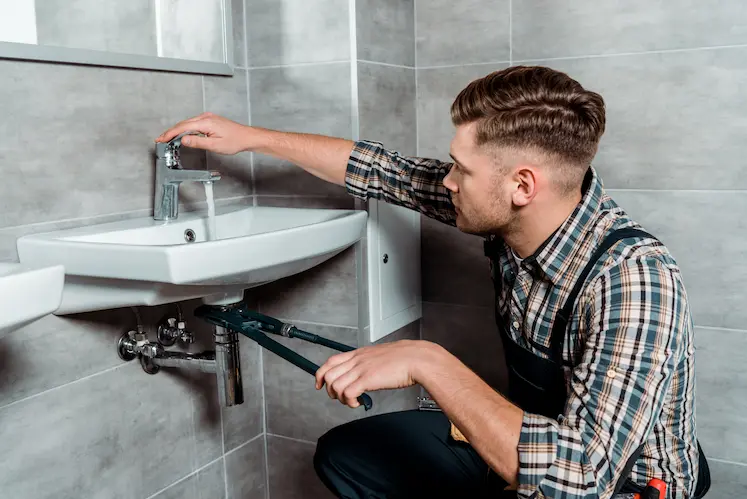
A dripping tap is one of the most common household plumbing problems, and one of the easiest to ignore. But that steady drip wastes water, can stain your sink and may be a sign that a part is wearing out. In many cases it is a simple, inexpensive fix.
- Find out where the tap is leaking from: the spout, the base or the handle.
- Turn off the water supply to the tap.
- Replace the worn washer, O-ring or cartridge.
- Call a plumber if it still leaks or the tap is corroded.
Common causes of a leaking tap
Where is it leaking from?
The location of the leak helps you work out the cause:
- Dripping from the spout: usually a worn washer or cartridge, or limescale on the seat.
- Leaking around the handle: often a worn O-ring or a loose part.
- Leaking from the base of the tap or underneath: can be a worn seal or a loose connection. Check for water under the sink as well.
How to stop a leaking tap
-
Turn off the water
Most modern taps have an isolation valve underneath or behind the sink. Turn it with a flat screwdriver. If there is not one, turn off the main stopcock. Open the tap to drain any water left in it, and put the plug in the sink so small parts do not fall down the plughole.
-
Take the tap apart
Remove the cap or cover on the handle, undo the screw underneath and lift off the handle. You can then unscrew the cover and the headgear to reach the washer or cartridge. Take photos as you go so you can reassemble it correctly.
-
Replace the worn part
Take the old washer, O-ring or cartridge to a DIY or plumbing store to match it exactly. Clean any limescale from the valve seat with a soft cloth or a little white vinegar before fitting the new part.
-
Reassemble and test
Put everything back in order, turn the water on slowly and check for drips. If the leak has stopped, you are done.
When to call a plumber
Call a professional if the tap still leaks after you replace the part, if the tap is old or corroded, if you cannot isolate the water, or if water is leaking underneath the sink. If the leak is heavy and you cannot stop it, see our guide to a plumbing emergency.
Is it worth replacing the tap?
If the tap is very old, pitted, or parts are hard to find, replacing the whole tap may be a better use of money than repeated repairs. A plumber can fit a new tap and check the pipework and isolation valves at the same time.
Why you should not ignore a dripping tap
- It wastes water, and if you have a water meter it adds to your bill.
- The constant drip can stain the basin or bath.
- A small leak under the sink can rot cupboards and cause damp over time.
Frequently asked questions
Can I fix a leaking tap without turning off the water?
No. Always isolate the water supply to the tap before taking it apart, or you risk flooding the area.
Why does my tap drip after I turn it off?
Usually a worn washer or cartridge, or limescale stopping the valve from sealing properly.
How long does it take a plumber to fix a leaking tap?
Many tap repairs are quick, but it depends on the type of tap and what has failed. A plumber can usually tell you once they have seen it. See our rates for more information.
Related guides
What to Do in a Plumbing Emergency: A Homeowner's Guide
Read the guide →
7 Common Signs You Need an Emergency Plumber
Read the guide →
What to Do If a Pipe Bursts in Your Home
Read the guide →Plumbing emergency? Don't wait.
Our engineers cover the UK 24 hours a day, 7 days a week. Pay only a £49 trip charge and get your quote on-site.